
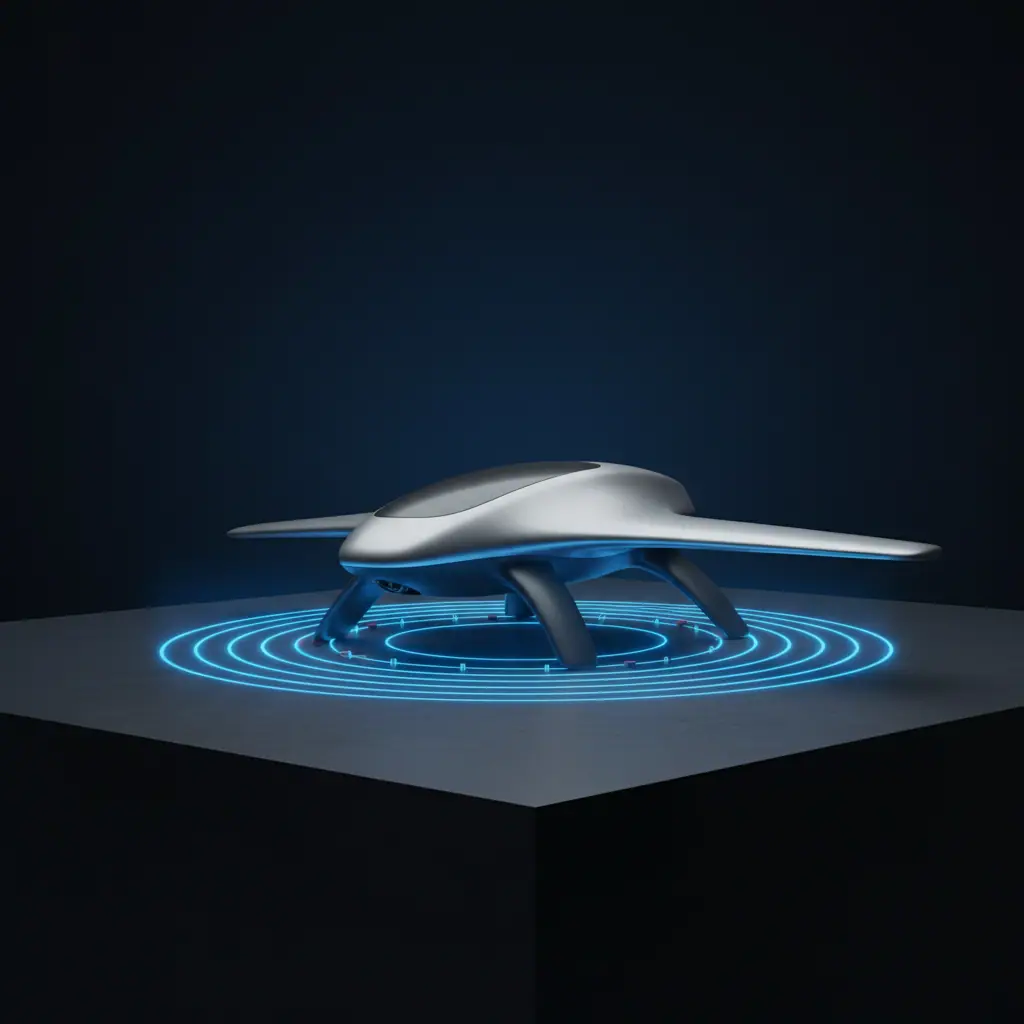
COILS · Wireless Charging Infrastructure for Robots and Drones
Drone Charging Station
Land,
and it charges.
Multi-coil wireless charging that works wherever it lands, with no precise docking.
When the mission ends, the drone recharges on its own and heads back to the field.
WHY WIRELESS CHARGING
As robots multiply, charging becomes the bottleneck of operations
Lack of Compatibility
Requiring dedicated chargers and connectors for each device continuously increases infrastructure and inventory burdens.
Reliance on Precise Docking
Even a slight misalignment causes efficiency drops or charging failures, demanding human intervention.
Contact Wear & Vulnerability
Exposed terminals are susceptible to dust, moisture, and corrosion, leading to breakdowns in outdoor and unmanned operations.
COILS IN NUMBERS
Proven by technology and track record.
3 kW wireless transfer efficiency
Certified test, Gyeongbuk Technopark (2025.10)
Leakage magnetic field at 20 cm
Limit: 6.25 µT or less
COILS TECHNOLOGY
Even without a precise landing,
it shapes the field on its own.
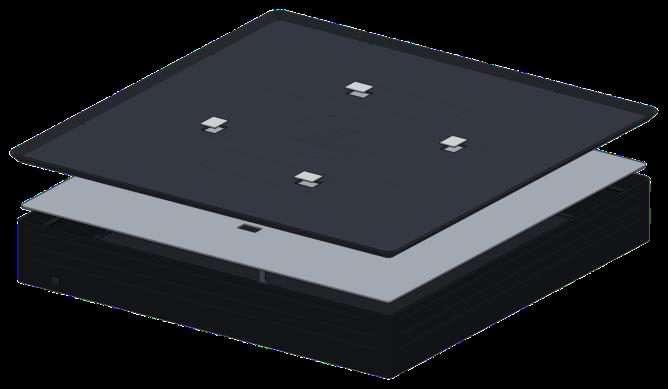
By arranging multiple small transmission coils, we selectively activate only the coils with high coupling where the robot lands.
- · Locates the receiver from transmitter current alone — no communication link needed
- · Keeps 95.6% efficiency even at 100 mm misalignment
- · One technology for drones, quadrupeds and humanoids
Single Tx Coil
Active coils 1 / 1 (always all on)
Field spreads over whole pad → more leakage & loss
COILS Multi-Tx Coils (7)
Active coils 7 / 7
Drive only coils under Rx → min leakage, high efficiency
WIRELESS CHARGING SOLUTIONS
One multicoil technology for all robots.


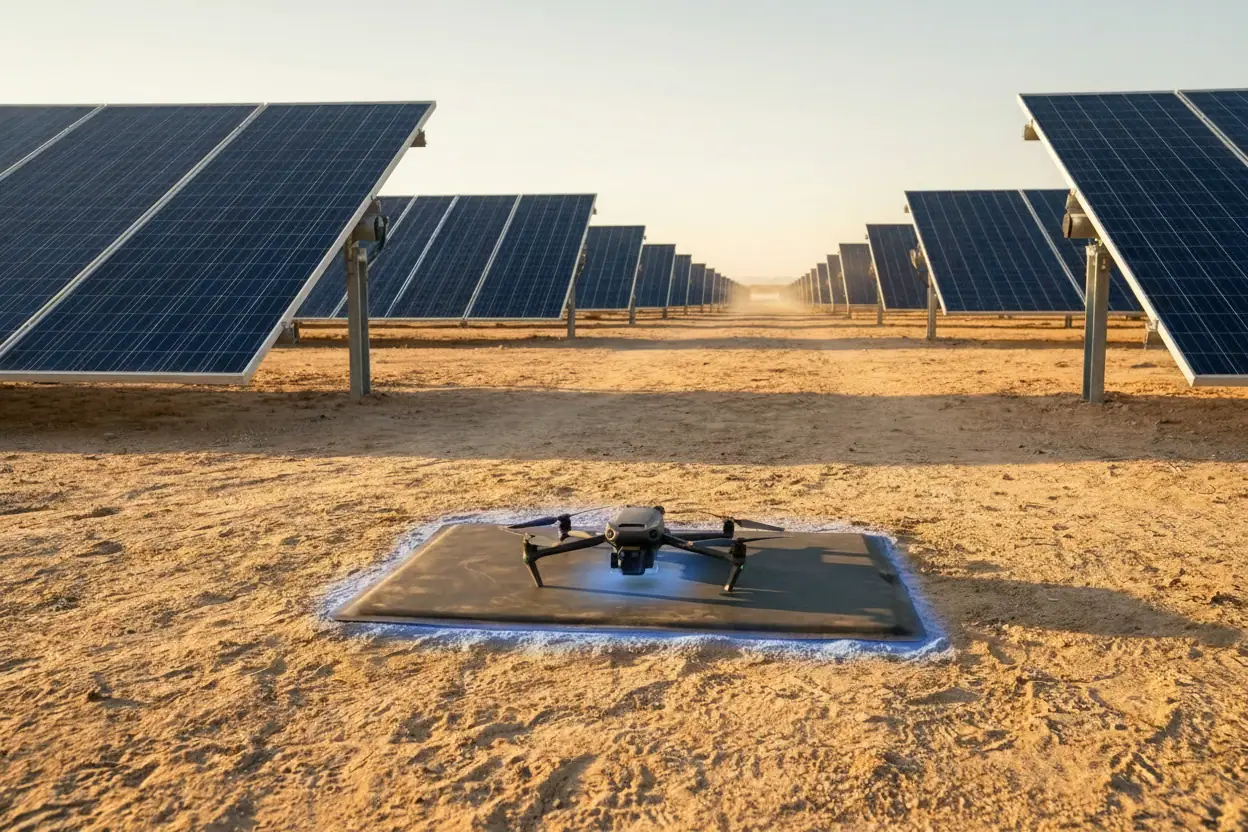 Concept image (AI-generated)Solar Farm Inspection
Auto-charge by Landing
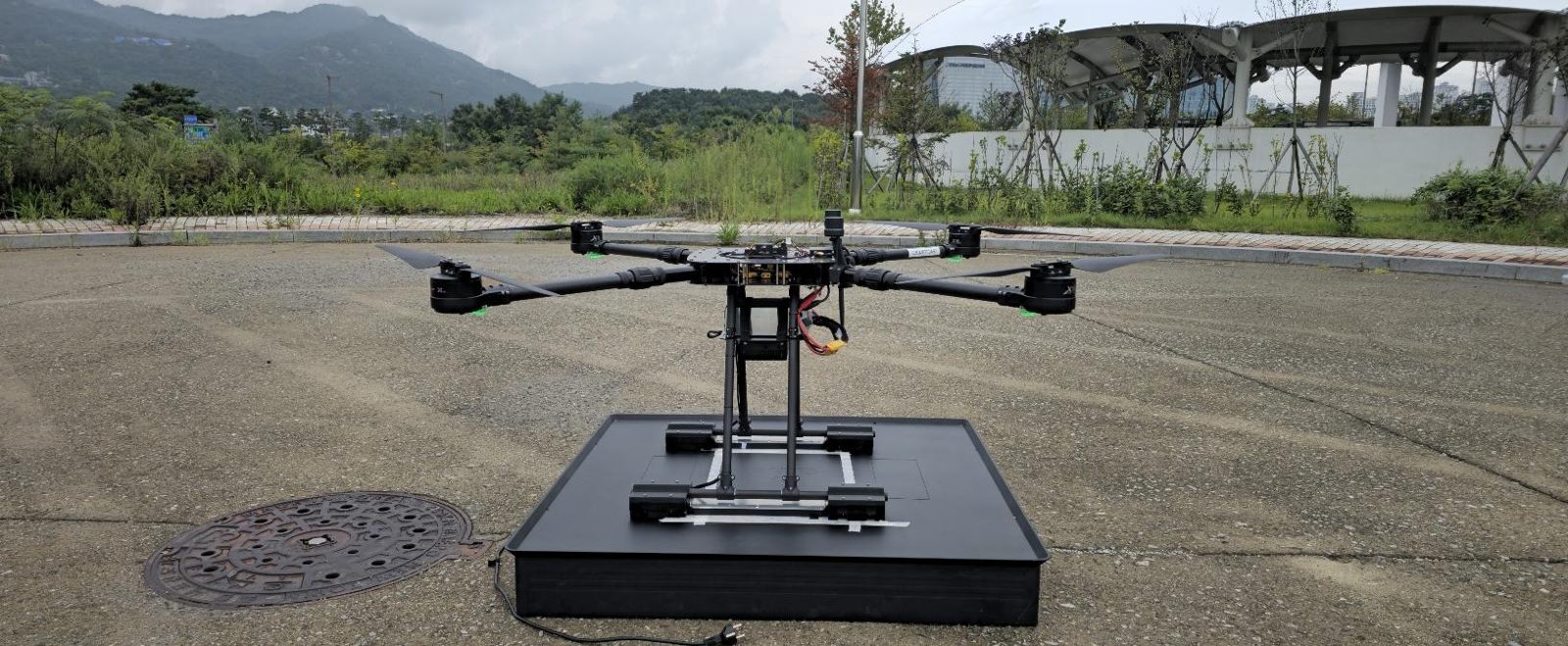
Drones patrol large areas, auto-charge on field pads, and resume flight.
 Concept image (AI-generated)Substation Inspection
Charge by Standing
Quadrupeds charge simply by standing on the pad during missions.
Our Collaborative Network
COILS NEWS
News
Wireless Charging Infrastructure for Robots & Drones